The Quiet Invitations
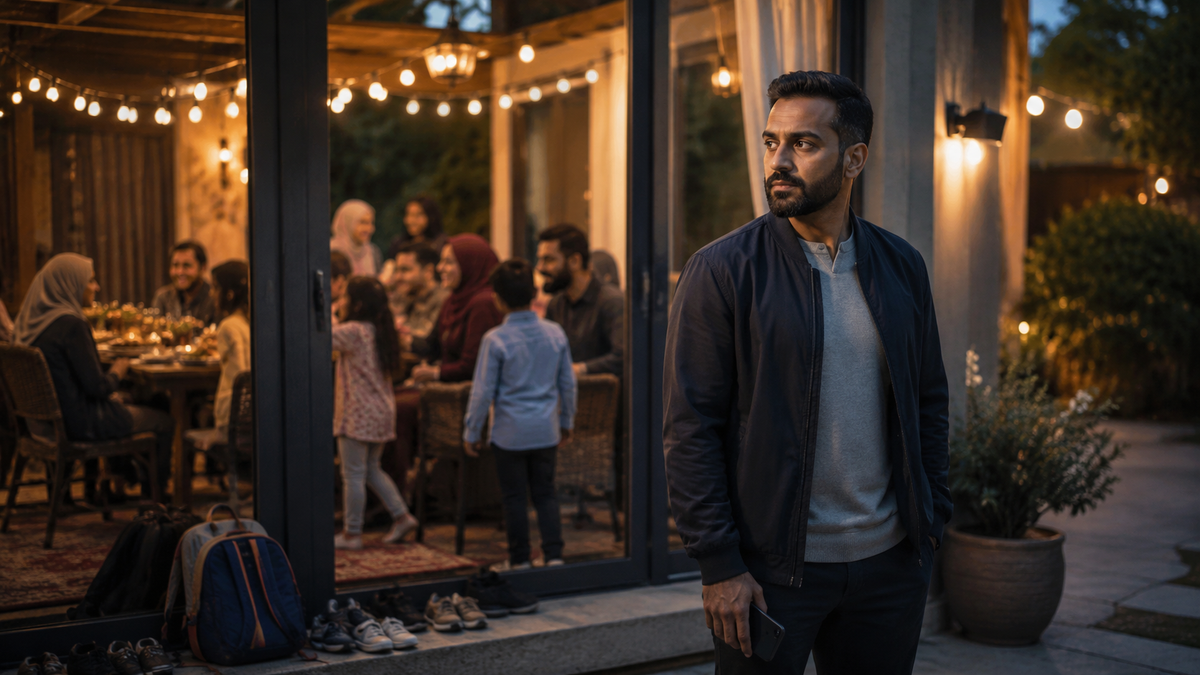
When a couple divorces, the rupture does not stay neatly between two people. It spreads quietly outward through the social fabric around them. Friends, neighbors, cousins, and community members suddenly face small but uncomfortable decisions: Who do we invite?
Consider a simple example.
Amir and Samira used to attend gatherings together. They were part of the same circle—barbecues in the park, children’s birthdays, Eid dinners, weekend hikes. Their friends never thought twice about sending an invitation. It simply went to “Amir and Samira.”
Then they divorced.
Now, when Farid and Aisha plan their daughter’s birthday party, they pause.
If they invite Amir, will Samira feel hurt?If they invite Samira, will Amir think he has been pushed out?If they invite both, will the room become tense?
After a few moments of discomfort, the easiest answer appears: invite only one. Or perhaps invite neither.
The invitations become selective. The social network quietly reorganizes itself around avoidance.
No one says this out loud. But everyone feels it.
The Psychology of Social Avoidance
At the heart of this behavior is a very human instinct: conflict avoidance.
Most people experience a deep discomfort when they sense potential tension between others. Psychologists call this social threat sensitivity—the brain interprets interpersonal conflict as a threat to group harmony.
When two people have a fractured relationship, the brain quickly begins running predictive simulations:
What if they argue?What if the children feel uncomfortable?What if everyone notices the tension?
The host imagines awkward silences, subtle hostility, or the need to play referee. Even if none of those things would actually happen, the anticipation alone creates stress.
So the mind looks for the lowest-effort solution.
Remove the potential conflict.
From a purely emotional standpoint, this feels efficient. But it comes at a cost.
Because what is being removed is not just tension.
It is people.
The Invisible Loss
For the person who stops receiving invitations, the loss is rarely dramatic. There is no confrontation, no announcement.
It happens quietly.
Samira notices that the Eid gathering she once attended every year passes without a message.Amir realizes that Farid’s weekend hikes have stopped including him.The children notice that families they used to visit no longer come around.
Everyone assumes the distance is natural.
But it isn’t.
It is the result of dozens of small, cautious decisions made by well-meaning people trying to avoid discomfort.
And those decisions slowly reshape the community.
Divorce already fractures a household. When friends begin unconsciously choosing sides or withdrawing, the fracture widens into isolation.
For many divorcees, the most painful part is not the separation itself. It is the quiet shrinking of their social world.
Why This Pattern Is Unhealthy
Avoidance may feel peaceful, but it weakens communities over time.
Healthy social groups are built on a principle that predates modern psychology: people belong to the community as individuals, not only as couples.
When invitations depend on marital status, the message becomes subtle but powerful:
Your place here was conditional.
This damages several things at once:
1. Personal dignityBeing quietly excluded creates feelings of shame or rejection.
2. Community resilienceGroups that avoid difficult situations become fragile. They lose the ability to navigate complexity.
3. Children’s sense of stabilityChildren of divorce often benefit when community relationships remain intact.
4. Authentic friendshipTrue friendship survives changes in people’s personal lives.
Avoidance protects short-term comfort, but it slowly erodes long-term trust.
Seeing the Human Story
To understand the impact, imagine one evening from Amir’s perspective.
It is Saturday night. His son Hasan is with Samira this weekend. Amir sits in his apartment scrolling through his phone.
On social media he sees photos: Farid’s backyard lit with string lights, children laughing, plates of grilled food on a long table. People he has known for ten years.
He recognizes everyone.
But he was not invited.
No one meant harm. Farid simply assumed it would be awkward with Samira there.
Yet Amir cannot see that reasoning. What he feels instead is something quieter and heavier:
Maybe people would rather not deal with me anymore.
Meanwhile, across town, Samira has her own moment.
At the masjid she hears someone mention the same gathering.
“Oh, it was just a small thing,” Aisha says politely.
Samira nods.
But she remembers when those gatherings included her family.
Two people, sitting in different homes, feel the same quiet distance growing around them.
And neither knows that the other feels it too.
Rising Above Social Fear
Communities are capable of better.
The key shift is simple: treat each person as an individual member of the community, not as half of a former couple.
This requires courage from hosts and friends, but it is surprisingly manageable in practice.
A few principles help.
1. Invite both unless there is a clear reason not to.Adults are capable of civil behavior. Many divorced parents already interact regularly through their children.
2. Normalize respectful coexistence.When a community calmly accepts that divorced individuals may attend the same events, tension quickly fades.
3. Avoid playing referee.Hosts are not responsible for mediating past relationships.
4. Keep communication simple and transparent.A message like:“Both of you are welcome. We value having you here.”
That clarity removes speculation and anxiety.
Most people respond positively when treated with straightforward respect.
A Different Outcome
Imagine the same birthday party at Farid and Aisha’s house.
Both Amir and Samira receive the invitation.
For a moment, each wonders whether the other will attend.
They both decide to come—for the children, for the friendships, for normalcy.
At the party they greet each other politely.
No drama unfolds. No confrontation appears.
Children run across the lawn chasing a soccer ball. Adults talk about work and school. Someone brings out tea.
Within an hour the imagined tension dissolves into the background noise of ordinary life.
Farid realizes something important:
The fear of awkwardness had been far greater than the reality.
The Responsibility of Community
Every community eventually faces moments where relationships change—divorce, relocation, illness, disagreements.
The health of that community depends on whether people respond with avoidance or maturity.
Avoidance shrinks the circle.
Maturity expands it.
In many spiritual traditions, including Islamic teaching, maintaining bonds of kinship and community—silat ar-rahim—is considered a virtue of high character. It requires patience, generosity, and the ability to treat people with dignity even when life becomes complicated.
When friends resist the urge to quietly exclude, they do something powerful.
They remind Amir and Samira—and anyone else walking through hardship—that their place in the community was never conditional.
It was always theirs.
And that simple act of inclusion can preserve friendships that might otherwise disappear in silence.
Here is the prompt I used to generate the above:
Write an essay talking about how friends of divorcees find it awkward to invite both mother and father to certain events. So they invite one or the other, or none at all to avoid any conflict. Talk about the psychological roots of this, and why this is not healthy in general. Give a narrative to the reader to build empathy with how this can hurt people and bonds. Show how people can elevate beyond this and improve. Use muslim sounding names where names are made.
Comments ()